
This week’s question is from Madeline Ramirez via the form. Madeline asks:
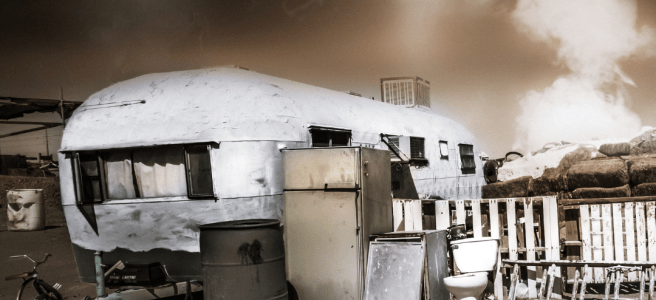
I recently watched an episode of Fresh Off the Boat in which the mom, Jessica, had to deal with renters/squatters on her rental property. The squatters referenced Squatters Rights to keep her from calling the police/evicting them. If you own property and find someone living there illegally/without your knowledge/without paying rent, at what point can’t you kick them out? How accurate are the squatter-scenarios we see in the media, and what is the extent of squatter’s rights in reality?
Thanks for asking, Madeline!
What are Squtters Rights?
This is a great question, and one that comes up in first-year Property Law classes in law school. Squatters’ rights are legally known as Adverse Possession. The laws vary by state, but for the most part, there are similar requirements across states. In Texas, the law governing adverse possession can be found in the Civil Practices and Remedies Code at Section 16.021 et. seq.
In order for a non-owner to claim ownership over a piece of land, there must be “an actual and visible appropriation of real property, commenced and continued under a claim of right that is inconsistent with and is hostile to the claim of another person.”
Let’s break that down.
1. Actual and Visible Appropriation of Real Property: This means that the “squatters” would have to actually be on the land they’re claiming in a visible way. This means the squatter can’t be hidden from view and must be visibly on the land so that the owner would have a chance to notice them there.
2. Commenced and Continued Under a Claim of Right that is Inconsistent with and Hostile to the Claim of Another Person: This means that when the possession of the property began and as it continued, the squatter claimed ownership over property that was legally owned by someone else.
Case law in Texas has added a few more requirements on top of that. The requirements are as follows with a little explanation next to each.
1. Actual possession of the disputed property – The squatter has to “actually” possess it – the squatter can’t just want to claim the land. He or she must actually be on the land. Additionally, they can’t just be there for a day or two (see below for time requirement).
2. That is open and notorious – Like we said above, they have to be obviously on the land, not hiding out and sneaking around.
3. Peaceable – The squatters can’t threaten physical violence to keep the owners out.
4. Under a claim of right – The squatters must intend to claim the land for themselves.
5. That is consistently and continuously adverse or hostile to the claim of another person – This means the land land legally belongs to another person, for instance, based on deed records. Squatters must also be on the land “continuously” for the statutory time. If they leave and come back, the clock resets. They also can’t try to claim land they abandoned.
6. For the duration of the relevant statutory period – There are various time frames and what a squatter can do based on how much time has passed. The timing goes up to ten years, but the squatter can attempt to assert some rights after just three years in Texas.
If the squatter has a document – like an old deed – that purports to give them land, they can try getting ownership in just three years. If the squatter has paid property taxes, has some kind of documentation, and has cultivated the land, they can try getting ownership in 5 years. Otherwise, the default timeline is 10 years. In cases where the owner is disabled, the law makes the squatter wait 25 years.
If you own property and find someone living there illegally/without your knowledge/without paying rent, at what point CAN’T you kick them out?
You usually would NOT be able to kick out a squatter if they have a successful claim of adverse possession. The time frame would depend on the rules above (or whatever rules apply in your state).
If it’s been less than three years, you can try to get them off your land. You can’t use force to remove anyone, but you can file an eviction lawsuit.
In Texas, you’d have to deliver a notice-to-vacate to the squatters, giving them a three-day notice that they need to leave. If they refuse to leave after three days, then you can head to your local Justice of the Peace court and file an eviction suit. Usually your case will be heard within a month or less. Because the squatters have no legal right to be there, absent a successful claim of adverse possession, the court would likely rule in the landowner’s favor and kick the squatters out.
How accurate are the squatter-scenarios we see in the media, and what is the extent of squatter’s rights in reality?
In 2020, a formerly homeless man in Oakland, California named Steve DeCaprio successful petitioned a court to become the legal owner of an abandoned house. He began squatting there three years before going to court, during which time he spent time and resources in fixing the place up.
The prior owner had died, and none of the heirs had attempted to claim the home. As such, after the required time period under the law, DeCaprio was able to petition the court and claim the house for himself. He is now the legal owner of the property.
On the flipside, Heidi Russell, a woman in New York City, found herself in a nightmare scenario when the roommate she let stay with her for a few months refused to leave. The Cut covered the strange case where the temporary roommate who Russell tried to boot after 2 months stayed for more than a year. The owner of the apartment couldn’t get rid of the woman due to strict renters’ rights under New York law and the CDC’s eviction moratorium, according to the New York Post. Though Russell secured a warrant of eviction, it remains on hold due to the pandemic.
Something similar happened recently to a California couple. Tracie and Myles Albert closed on a home worth over $500,000 in Riverside, California in January 2020. Sounds like a dream, right? It would be, except the previous owner refused to leave for FIFTEEN months, during which time the new owners had to pay the taxes and fees. The Alberts had purchased the home for cash with their entire life savings, so for over a year, the previous owner had the cash in his account and continued to live in the sprawling 4-bedroom home with a view rent-free. It wasn’t until a news story broke on the situation that the squatters finally left on their own.
In the case of Russell and the Alberts, the squatters were able to stay, not because of squatters’ rights, but because of the CDC’s eviction moratorium. An attorney interviewed by The Sun said he handled several cases similar to the Alberts’ where previous owners – not renters – were being allowed to stay in homes they no longer owned.
The CDC moratorium is different from squatters’ rights. So far, it has helped millions of renters avoid eviction and homelessness during the pandemic. According to the nonpartisan research and policy institute Center on Budget and Policy Priorities (CBPP), “An estimated 10.9 million adults living in rental housing — 15 percent of adult renters — were not caught up on rent, according to data collected April 28–May 10.” The moratorium, which expires on June 30 in Texas, is the only thing standing between those people and eviction.
While squatters’ rights require more than what you sometimes see on TV, you can see how they bend both ways. If a home would be otherwise abandoned as in the case of Steve DeCaprio in Oakland, it may be a good thing to have a squatter come in, improve it, and in the process, avoid homelessness. In other cases, they can cause a real-life nightmare where homeowners are denied enjoyment of their own property like the cases of Heidi Russell in New York or the Alberts in California.
Thanks again for asking, Madeline!
Got a question? Submit it here. They can be legal what-if questions, questions on current events, or questions about the legality of actions in TV shows or movies you’ve seen. I never ever want to answer your personal legal questions, so don’t send those. Love you, but I don’t do that.
***
This piece first appeared in Sunday Morning Hot Tea. Subscribe so you don’t miss another piece.

 Heather vs. the World