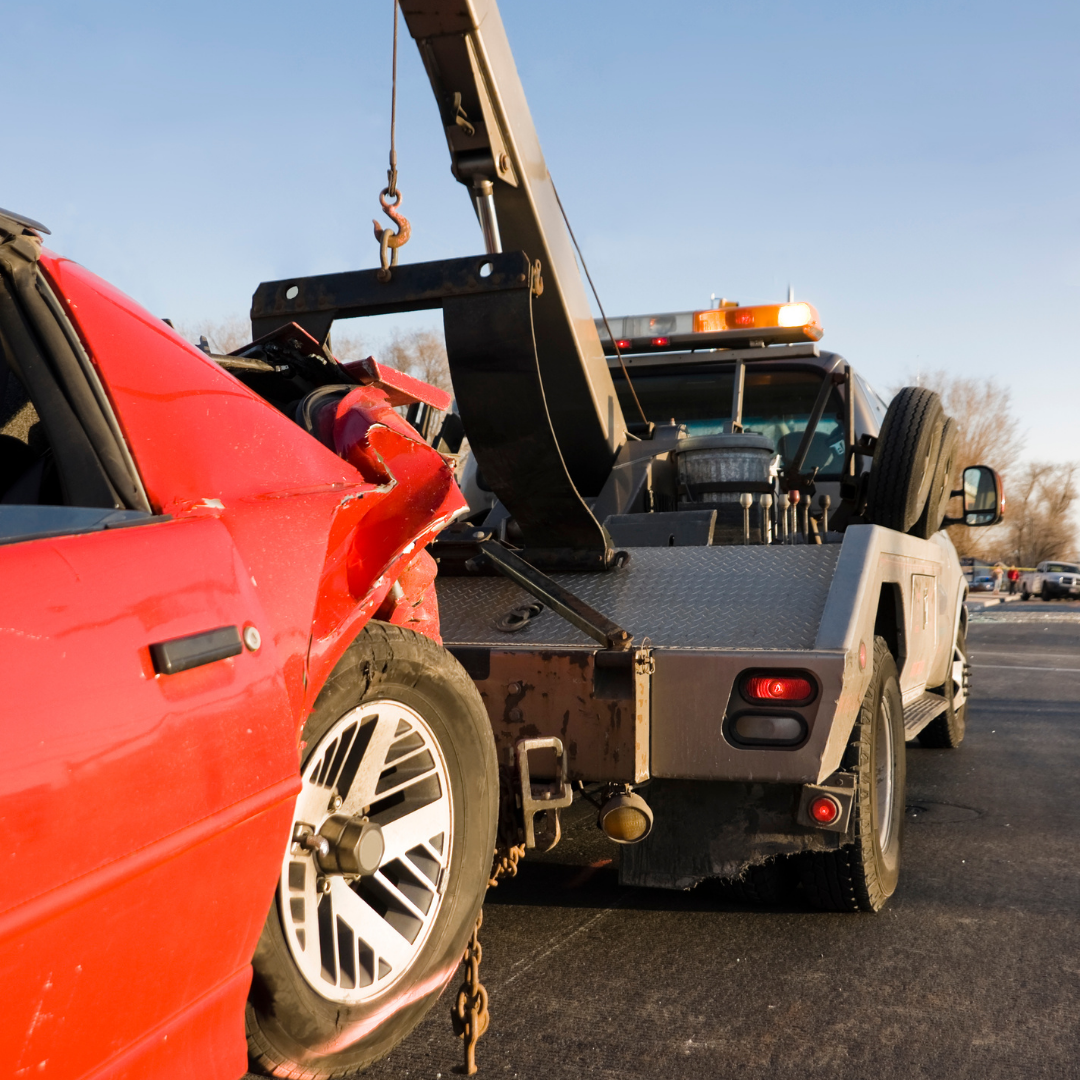
This week’s question is from Austin who asked me in-person. Austin asked:
How is towing not a violation of the Fourth Amendment?
Great question, Austin! I am going to quote from some SCOTUS decisions in this answer, but I’m not going to give you footnotes or citations because it’s Sunday morning and it’s early. Just know if you see quotation marks, it’s from the Court.
The Fourth Amendment (probably my favorite Amendment to discuss) protects the right of the people to be secure in their persons, houses, papers, and effects, against unreasonable searches and seizures.
See how it doesn’t say we are secure from ALL searches, just “unreasonable” searches. Generally, searches without a warrant are automatically unreasonable unless they fall into one of a few exceptions.
The exception that applies to towing is called the “community caretaking” exception. All these exceptions have been created by the Supreme Court, as it interprets the Fourth Amendment and applies it to specific cases. The community caretaking exception was developed in a 1976 Supreme Court decision called South Dakota v. Opperman.
In that case, the Court explained that police can impound cars to protect “public safety” or “community caretaking functions.” Those functions include towing “disabled or damaged vehicles” and “automobiles which violate parking ordinances, and which thereby jeopardize both the public safety and the efficient movement of vehicular traffic.” The Court called that right of the police to tow cars for public safety “beyond challenge,” so it’s a pretty solid reason why someone’s car can get towed.
The only time that “community caretaking” exception could be violating the Fourth Amendment is if that supposed caretaking was simply a pretext, or an excuse, for police to search a car on suspicion of criminal activity. When deciding that, courts have to analyze whether towing for purposes of “community caretaking” was reasonable, based on the facts and circumstances encountered by the officer at the time of the tow.
Some reasons why police may tow a vehicle is to protect it – for instance, if it is likely to be vandalized or stolen. If that is the police’s reason for towing the car, the court would look at the facts and circumstances: are cars frequently stolen in that area? Is there something damaged on the car, like a door lock or window, that would make it susceptible to being broken into?
Once they have towed the car, cops can perform an “inventory search” of the vehicle. The Court has held that an inventory search can’t be “a ruse for a general rummaging in order to discover incriminating evidence.” Giving cops free rein to dig through a car could lend itself to that “general rummaging.” To prevent that, the Court demands that there be a “single familiar standard” in place to guide the police and keep them to the task at hand – inventorying the items in a car that has been towed to protect the police and the car owner.
In order not to violate the Fourth Amendment, the police standard must “sufficiently limit discretion of law enforcement officers to prevent inventory searches from becoming evidentiary searches.” This means the policies and procedures need to be clear and strict to keep the police on-task when inventorying items.
To that end, the policies and procedures should have three purposes, according to the Court. These are “(1) protecting the property of the vehicle’s owner, (2) protecting the police against claims or disputes over lost or stolen property, and (3) protecting the police from danger.” The danger could be explosives or other harmful items inside a car.
The standards are important in the Court’s opinion because they help guide police “who have only limited time and expertise to reflect on and balance the social and individual interests involved in the specific circumstances they confront.” This means the procedures provide a quick and easy-to-follow guidance when police have to jump in and inventory items in a car.
If police find illegal stuff when conducting the inventory, those items can be admissible as evidence agains the driver whose car was towed. Sometimes, police wrongfully pull over a car or wrongfully tow the car. That’s when a car owner can challenge whatever police found when unconstitutionally searching their car.
There are tons of scholarly articles written on and a long list of cases discussing these concepts. But you didn’t ask for all that, you asked how towing isn’t a violation. Here’s the TL;DR version —
Towing doesn’t violate the Fourth Amendment if the towing was for public safety. Just because police tow your car does not give them free rein over the contents. But they can inventory the items, and if they see something in plain view, that can be used as evidence against you. They can’t “generally rummage” through your stuff and they have to follow a policy meant to protect your stuff, protect the police from claims of stolen items, and protect the police from danger.
Thanks for asking, Austin!
Got a question? Submit it here. They can be legal what-if questions, questions on current events, or questions about the legality of actions in TV shows or movies you’ve seen. I never ever want to answer your personal legal questions, so don’t send those. Love you, but I don’t do that.
***
This piece first appeared in Sunday Morning Hot Tea. Subscribe so you don’t miss another piece.